WHY THERE ARE TWO RAGUSA?
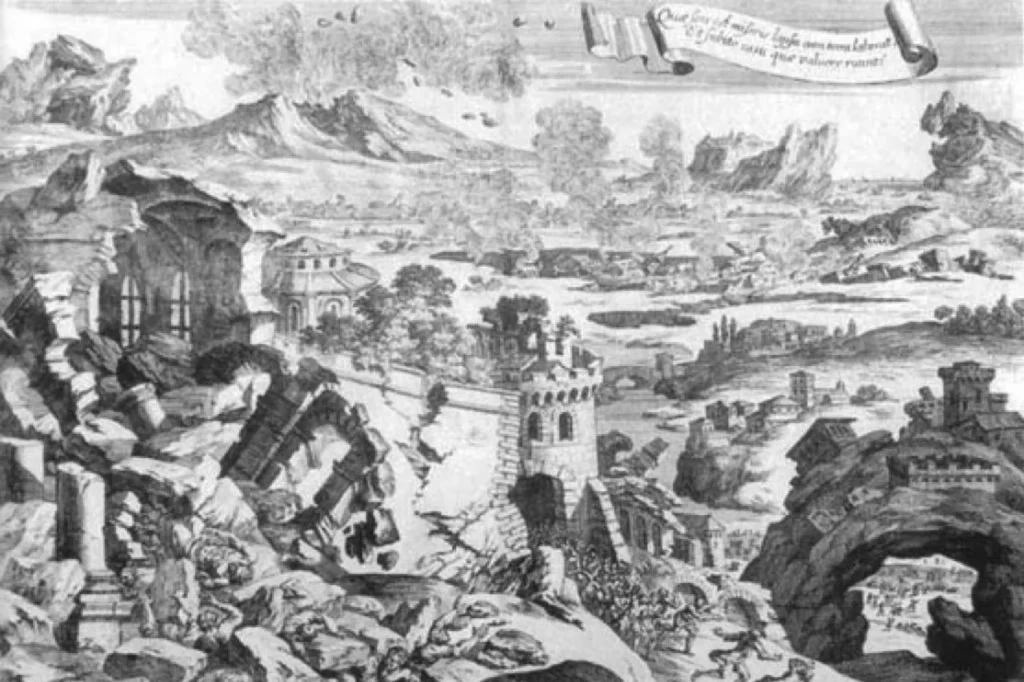
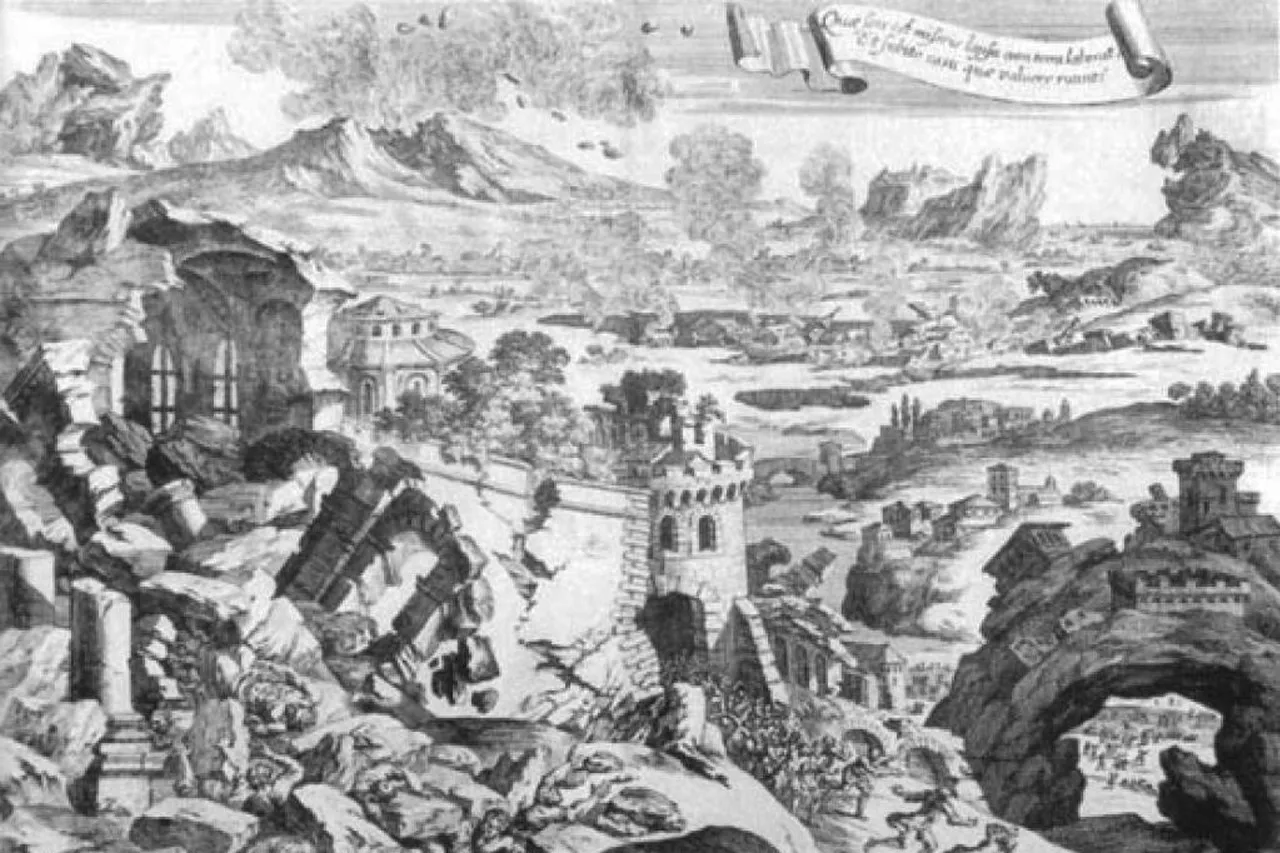
Often our guests ask us this question. It’s all the fault – or merit – as the inhabitants of upper Ragusa would say – of an earthquake, known to history as “u teremotu ranni”.
In 1693 Sicily, and especially the Val di Noto, was devastated by the strongest earthquake ever to be recorded on the Italian peninsula. The epicentre of the initial tremor, on January 9, was recorded between Melilli and Sortino, in the area from Siracusa to Lentini.
It was a catastrophe not only in terms of human loss, but also for the destruction of a cultural and artistic heritage that was almost entirely razed to the ground. Bishop Francesco Fortezza recorded that of the 64 monasteries in the Syracuse diocese, only 3 were left standing.
And so the ubiquitous examples of Chiaramonte Gothic architecture — typical of the area — virtually disappeared; thankfully some splendid examples survived, such as the Church of Santa Maria delle Scale in Ragusa and the ancient portico of San Giorgio in Ibla.
The resilience and stoicism of the Sicilian people, sustained by a deep-seated faith in the Divine, ensured that this calamitous event was followed by an unimaginable recovery. The people of the Val di Noto found the resources to artfully reconstruct their entire heritage, with a novel, rich, sinuous and elegant form, in perfect Baroque style.
Grand and scenic architectural compositions, facades and gargoyles decorated with intent and elegance now define the Ragusan urban heritage and of all other areas hit by the “terremotu ranni”, and are since 2002 now also listed as part of the UNESCO World Heritage.
Majestic buildings such as the Cathedral fo San Giorgio in Ragusa Ibla are scattered throughout the territory, a remainder of the great rebirth of a people who refused to submit to defeat.
Italy is incredible: and you have to go to Sicily to see how incredible Italy is.
(Leonardo Sciascia)
>> Ragusa – Church ofSanta Maria delle Scale: one comes here to enjoy one of the most breathtaking views of Ragusa but also to embark on a voyage through 15th century Sicily, with its Gothic architecture, most of which was destroyed following the 1693 earthquake.
>> Modica: the grandiose Baroque architecture of the Cathedral of San Giorgio is instead a striking example of the reconstruction of the Val di Noto following the tragic earthquake, a hymn to rebirth.
Faith and re birth, the two Ragusas.
Ragusa was one of the towns that was most badly-hit by the earthquake, whose topography changed substantially with reconstruction. Some towns, like Modica, were rebuilt on the same spot, others shifted further down the valley (Scicli) while others, like Noto, were rebuilt elsewhere.
But Ragusa experienced a “sciarria” (literally, a fight, a violent brawl).
Up until 1693 the town had established itself exactly where Ragusa Ibla stands today, but the calamitous event not only shook the foundations of its houses and monuments but also the souls of its inhabitants.
Ragusa boasted two major churches, home to two main confraternities, both serving as spiritual guides to the town’s two rivalling ‘factions’.
The community of the Church of San Giovanni was in large part made up of people from Cosenza, in Calabria, also known as “massari”, who had moved to Ragusa under the Norman King Roger II of Sicily and Duke of Calabria, and also included the new burgher class. The community of the “sangiorgiani”, on the other hand, with ties to the Church of S. Giorgio, comprised the Ragusan nobles and their entourage.
The two factions were divided by an ancient and enduring rivalry that found a new means of expression precisely in the reconstruction of the town. Keen to enhance their position, the “sangiovannari” went on to build a new and autonomous town on the nearby hill of Mount Patro, and there rebuilt the new Cathedral of San Giovanni.
After years of rivalry, the two municipalities were eventually joined in 1927, when Ragusa became a Province; St John remained as the city’s patron saint but Lower Ragusa succeeded in keeping St George as its own ‘district’ patron.
The reconstruction of the Val di Noto after 1693 was an incredible feat. Catastrophes of similar magnitude have in the past hit Europe but the quality of the architectural and urban reconstruction that took place in Sicily remains a unique and quite noteworthy. The experience of tradition is renewed and regenerated thanks to new models, where urban space is reconfigured — even anti-seismically — in a renaissance of a new aesthetic, new buildings and new cities.
In addition to an immense knowledge and capacity for renewal, what is also striking about the Sicilians is the profound faith of its people: with the sacred as the driving force behind the re birth following the events of January 11, 1693..
“Perhaps in the whole of Christendom there is no other sanctuary decorated and venerated in such an ingenuous and moving manner
J. W. Goethe
>> The steps: the 242 steps that join Corso Italia — in Upper Ragusa — to Ragusa Ibla, not only offer a breathtaking panorama at any time of day, but they represent the symbol of a hard-won reunification. Today we owe this unique and breathtaking setting of modern Ragusa to the rivalry between “massari” and “sangiorgiani”, a relic of past rivalries.